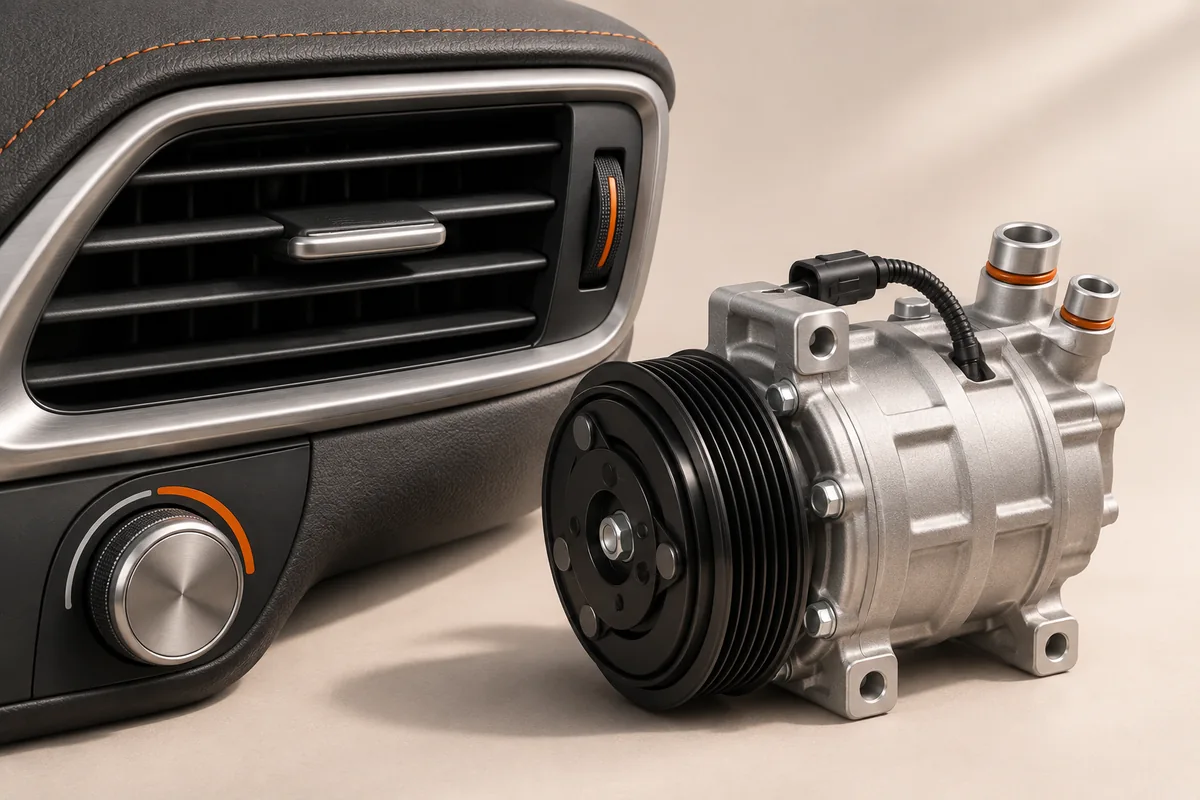
If your car's AC isn't blowing cold, first check whether the vents deliver a strong stream of warm air or very little air at all. A strong breeze means the cabin blower is moving air, but the system may not be cooling it properly or may be mixing heat back in. A weak breeze calls for a look at the filter, blower, and where the air is going. Neither symptom, by itself, tells you to buy refrigerant. Toyota's AC troubleshooting guide makes this same distinction between temperature and airflow.
Start at the driver's seat
With the car safely parked outdoors, select the dash vents, open their louvers, turn on the AC, and set both temperature zones to cold if the car has separate controls. Choose a fixed fan speed so automatic climate control doesn't change the breeze while you're comparing vents. Then change the fan speed deliberately. Does the air get stronger? Does it come from the outlets you selected? Compare the left and right center vents with the settings still matched.
| What you notice | What it helps narrow down |
|---|---|
| A strong, warm breeze from every vent | The blower works at that setting. Cooling performance and temperature mixing need attention. |
| Little air from any outlet, even on high | A restricted cabin filter or a blower problem deserves a look before refrigerant service. |
| Air reaches the floor or windshield instead of the selected dash vents | Report where the air actually goes. The shop can check the controls that direct it. |
| One side stays warm with both zones set to cold | A side-to-side temperature comparison and a check of the air-mixing controls are useful. |
A cabin filter can limit how much cooled air reaches you. If you can feel a strong, steady stream that turns distinctly warm, however, a filter replacement alone doesn't explain that temperature change. Tell the shop which of those two problems you want it to investigate.
Why AC can work on the road but blow warm at idle
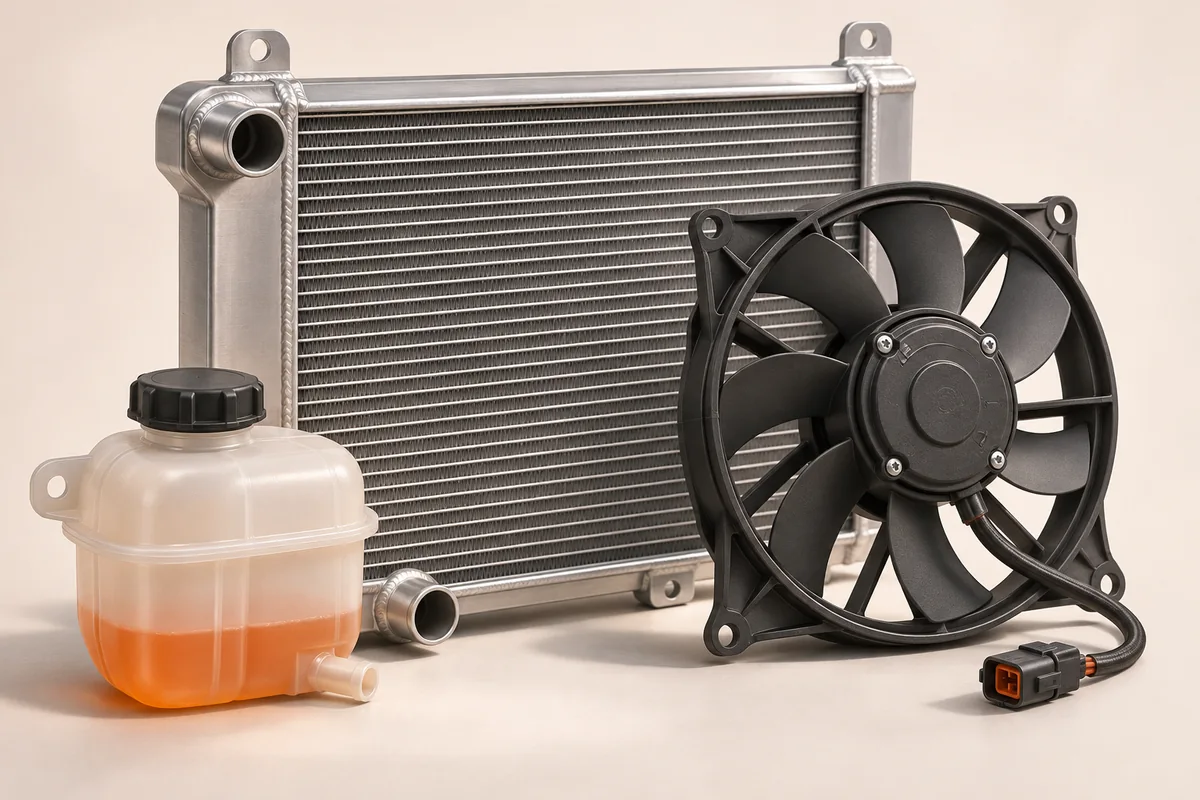
The condenser releases heat to the outside air. When the car is moving, air passes through it; at a standstill, the cooling fan matters more. If the vents stay breezy but turn warm at a long light, then cool again once the car gets moving, ask for a condenser airflow and fan-operation check. That's a different fan from the one you hear blowing inside the dash. DENSO's AC service guidance identifies airflow through the condenser and radiator as part of a cooling-performance check.
The distinction matters at the appointment. A car that arrives with cold vents after a highway drive may still have a problem in traffic. Describe the stop where you first noticed the change and whether the cabin fan kept blowing just as hard. If the engine temperature also climbs toward hot or an overtemperature warning appears, pull over safely and shut off the engine. That changes the immediate concern from cabin comfort to engine overheating; don't keep it idling to demonstrate the AC symptom.
When it starts cold and then quits
Pay attention to what changes first. If the breeze becomes weaker even though you haven't touched the controls, note whether it fades at all the outlets or moves somewhere else. If the breeze stays strong but loses its chill, the more useful question is whether the refrigeration system is still providing cooling when the problem occurs. A technician can compare outlet temperature, compressor operation, and the control inputs during that warm period. A cold reading taken right after startup can miss it.
A simple description such as both center vents stayed strong, but the air turned warm before I reached traffic gives the shop more to work with than AC cuts out. Mention whether cooling returned while you were still driving, only after parking, or never returned that day. If the system was recently recharged, bring the invoice. A return of the same symptom is a reason to check what the prior service established, including whether anyone found a leak.
When the passenger and driver get different temperatures
First rule out a setting difference. Match the temperatures or select sync, then compare corresponding vents rather than a dash outlet on one side with a floor outlet on the other. Change the temperature setting on the warm side and note whether that side responds at all. If it stays hot while the other follows its control, say so. That observation helps a technician decide where to measure and which controls to check.
Inside the dash, the climate system directs air and adjusts the mix of heated and cooled air. A problem there can change what reaches one occupant even when the system produces some cold air. A side-to-side difference alone doesn't establish a broken air door or low refrigerant. Ask whether the proposed repair explains both the cold outlet and the warm one.
What to ask before authorizing a recharge
A useful AC diagnosis connects a measurement to the complaint: which vents were warm, under what conditions, and what happened at the condenser and compressor at the same time? If the shop finds the refrigerant charge low, ask where it found evidence of leakage. Adding refrigerant can restore cooling without fixing the opening through which it escaped. The estimate should distinguish leak detection, the repair itself, refrigerant service, and the final performance check.
Leave opening the refrigerant circuit to a shop equipped to identify and recover its contents. The EPA's motor vehicle AC servicing guidance prohibits intentionally venting regulated refrigerants during service. The refrigerant type matters, too; guessing from the shape of a can or adding an unknown product makes the next service harder.
Common AC questions
Is a clear puddle under the car a refrigerant leak? Clear water that appears after AC use can be normal condensation draining away. That puddle alone doesn't show that the refrigerant charge is low.
Does the AC button lighting up mean the compressor works? The light tells you the setting you selected. A shop still needs to check how the system responds, especially if the button stays lit after the vents turn warm.
How cold should the vent feel? A single target without the test conditions isn't a useful pass or fail. Ask for the outlet reading, the conditions when it was taken, and how it compares with the procedure for your car.
Check the references
Sources
- Toyota Troubleshooting Common Car AC Issues
- DENSO Seven Basic Steps of Car A/C Service
- EPA Regulatory Requirements for MVAC System Servicing
Sources checked November 8, 2026. This guide is a synthesis of published information; it has not been independently reviewed by a certified mechanic. Follow the service information for your exact vehicle. Read our editorial policy.