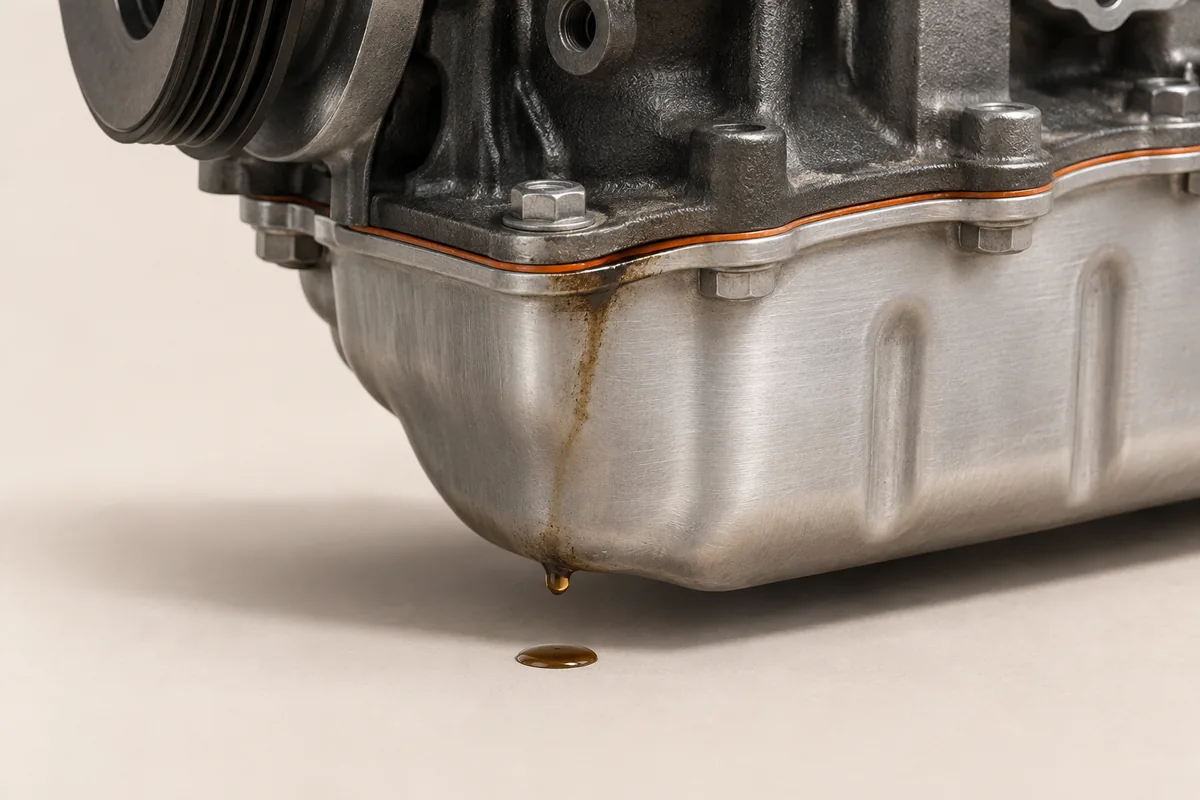
A fresh oil spot is a reason to check the engine oil level and trace the leak before pricing a gasket. The spot shows where fluid reached the ground, which can be some distance from where it escaped. If the oil-pressure warning comes on while the engine is running, pull over safely and shut the engine off. Even a dipstick reading in the normal range doesn't clear that warning. Ford's oil-check and pressure-warning instructions distinguish the amount of oil in the engine from the pressure needed to circulate it.
What an oil spot under a parked car tells you
Oil may escape while the engine is running, collect on a lower cover, then drip after you park. Or it may seep from a joint while the car sits. From the driveway, the two can look identical. The position of the spot relative to the front wheels and how long the car was there are more useful details than a guess about which seal sits directly above it.
On a clean parking surface, photograph the fresh mark with something beside it for scale. If you use clean cardboard to catch a drip under a parked car, slide it into place from the side and remove it before driving. There's no reason to crawl underneath. Note whether you find isolated drops after an overnight stay or a new puddle forming as you watch. A stain spreading through porous concrete isn't a reliable measure of how much oil the engine lost.
Also check that the fluid belongs to your car and is actually engine oil. Color alone is a poor basis for ordering parts. The Fel-Pro leak inspection checklist separates engine leaks from cooling-system and drivetrain leaks. If the fluid hasn't been identified, describe it and its location to the shop rather than booking an oil-pan repair.
Check the level and decide how urgent the leak is
Use level ground and the oil-check procedure in your owner's manual. On a vehicle with a dipstick, the prescribed drain-back interval matters when comparing readings. If your vehicle uses an electronic level display, follow its measurement conditions. Write down the reading and any oil added. Use the specified oil and don't fill above the maximum mark; a consistent measurement is more useful than several readings taken under different conditions.
| What you observe | What to do next |
|---|---|
| Oil-pressure warning while the engine runs | Stop safely, shut off, and seek assistance. A correct level doesn't prove adequate pressure. |
| Oil running out, a rapidly falling level, or smoke from the engine area | Shut off safely and arrange assistance rather than driving to identify the leak. |
| Fresh drops keep appearing, but the measured level hasn't noticeably changed | Arrange an inspection. Record the level and how often the drops appear so a change is apparent. |
| A burning-oil smell with little on the ground | Report when and where you notice it. Oil can reach a hot surface before it ever reaches the pavement. |
The first wet joint matters more than the lowest drip
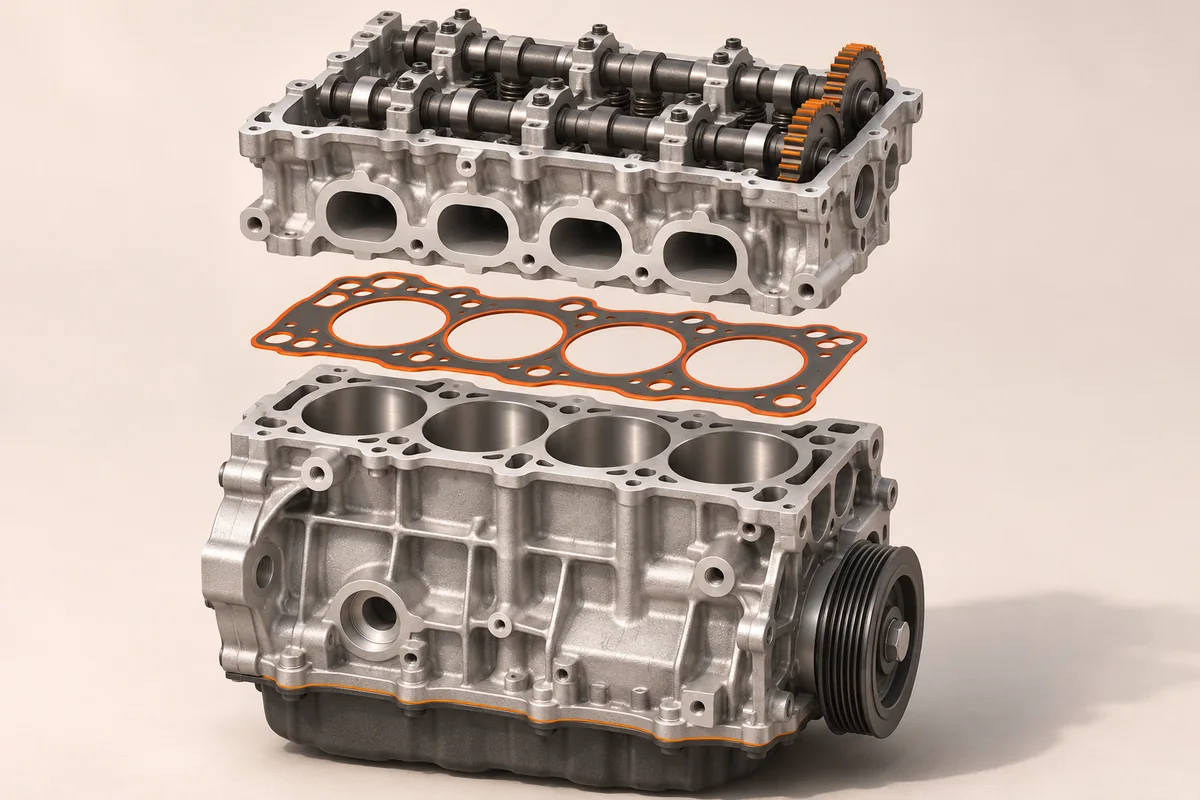
A valve-cover gasket seals a joint high on the engine. Oil escaping there can run down the outside of the engine and leave the oil pan wet. The pan, sometimes called the sump, can also leak at its own sealing surface or drain plug. Those are different jobs. Timing-cover gaskets and crankshaft seals are other possible sources. A photograph of the underside showing an oily pan doesn't distinguish any of them.
Ask the technician to show you where fresh oil first appears. If the engine is coated with old residue, cleaning the suspect area and rechecking it can reveal a trail that wasn't visible before. If the estimate names several gaskets, ask whether each has an independent fresh leak or whether oil from the highest one could account for the lower wet areas. That question can separate repairs needed now from places worth rechecking after cleanup.
If the leak appeared just after an oil change
Contact the servicing shop and give it the date of the change, the first time you saw the spot, and the current oil level if it was safe to measure. The filter and its seal, the drain plug and its sealing surface, and the filler area are useful places for the shop to inspect. A spill left on a shield can drip later, but a fresh leak at the filter or plug needs correction. Timing makes those service points worth checking; it doesn't establish who caused the leak.
Don't try to settle the question by tightening the plug or filter from underneath. Ask the shop to distinguish leftover oil from an active leak and to verify the level after it checks the service points. If the pressure light came on or the car left a growing puddle, tell the shop before arranging transport; don't drive it back simply because the service was recent.
Why oil leak repair quotes differ
The price depends on which joint leaks and what has to come off to reach it. Correcting a drain-plug sealing issue is a different scope of work from replacing a crankshaft seal with components blocking access. Even a modestly priced gasket can require substantial disassembly. The exact engine matters, so give the shop the year, model, and engine or VIN when requesting an estimate.
Ask for a written price that separates finding the source, parts, access labor, fluids, and the check for fresh leakage afterward. If two quotes differ, compare the named repair first. One shop may be quoting diagnosis and cleanup while another is quoting removal and resealing of the pan. Until both are pricing the same confirmed leak, their totals don't tell you which is the better offer.
Oil leak questions
Can I prevent another leak? Follow the vehicle's oil service instructions and check for fresh spots after service. Catching a changed level or a new drip early is useful; it doesn't mean every aging seal can be kept from leaking.
Will a stop-leak additive save me a gasket repair? It won't tell you which joint is leaking or correct a filter installation problem. Identify the source and follow the manufacturer's oil guidance before considering anything added to the oil.
Why does the driveway still show drops after a repair? Residual oil and a continuing leak are both possible. Photograph the new drops and ask for a recheck of the cleaned repair area. Fresh oil at the repaired joint is more telling than an old stain on a lower cover.
Check the references
Sources
Sources checked November 8, 2026. This guide is a synthesis of published information; it has not been independently reviewed by a certified mechanic. Follow the service information for your exact vehicle. Read our editorial policy.