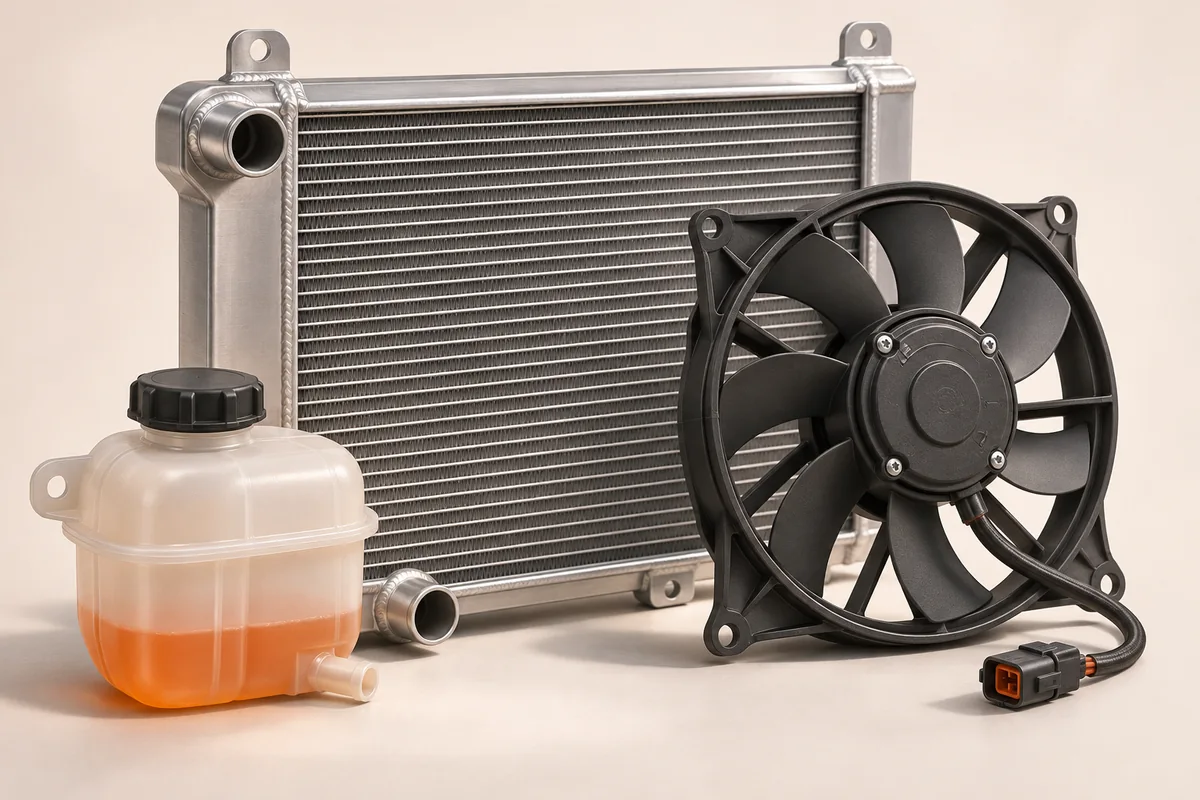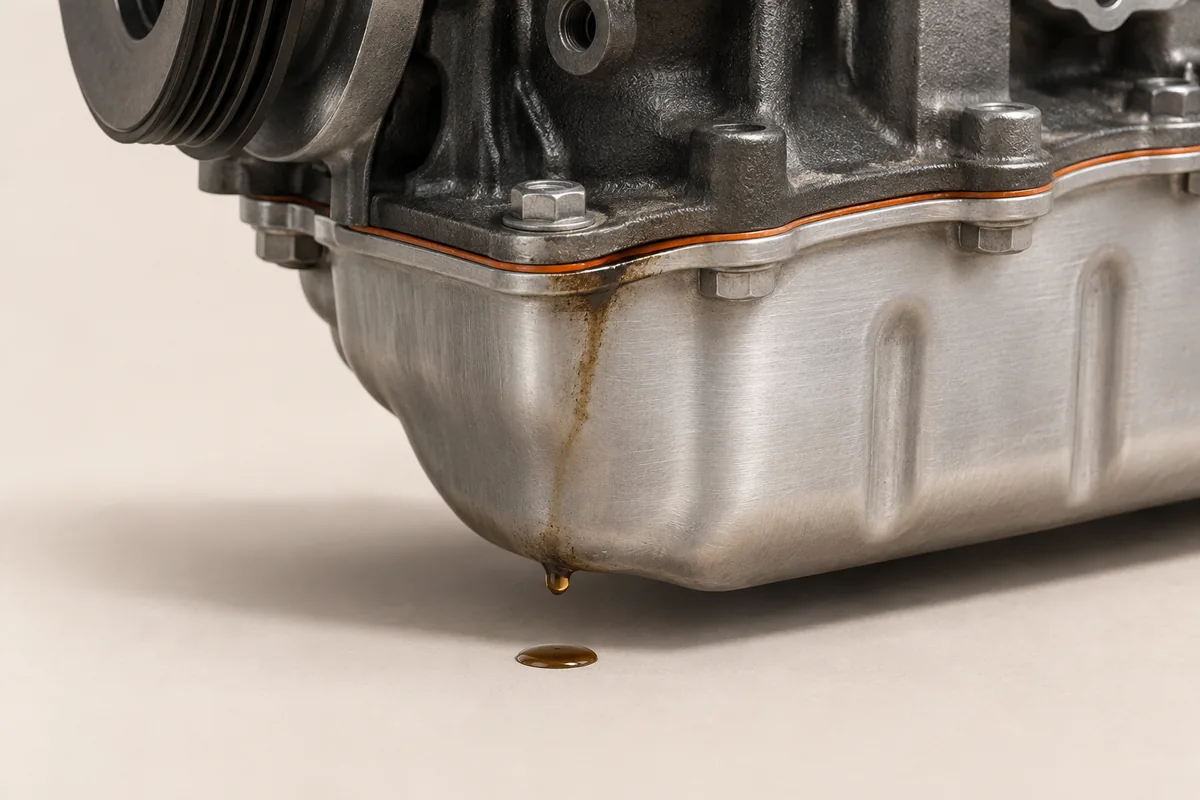
A falling coolant level together with persistent white exhaust, rough running, or oil that appears contaminated raises concern about a leaking head gasket. Overheating can accompany the leak, but the temperature gauge does not have to climb for a sealing problem to exist. A cracked cylinder head can produce much the same pattern. If the engine is overheating, pull over safely, shut it off, and arrange assistance. Leave the cooling-system cap closed while the engine is hot. Fel-Pro on cracked heads and gasket leaks · Fel-Pro on the risks of continued driving
Why the first signs differ from one engine to another
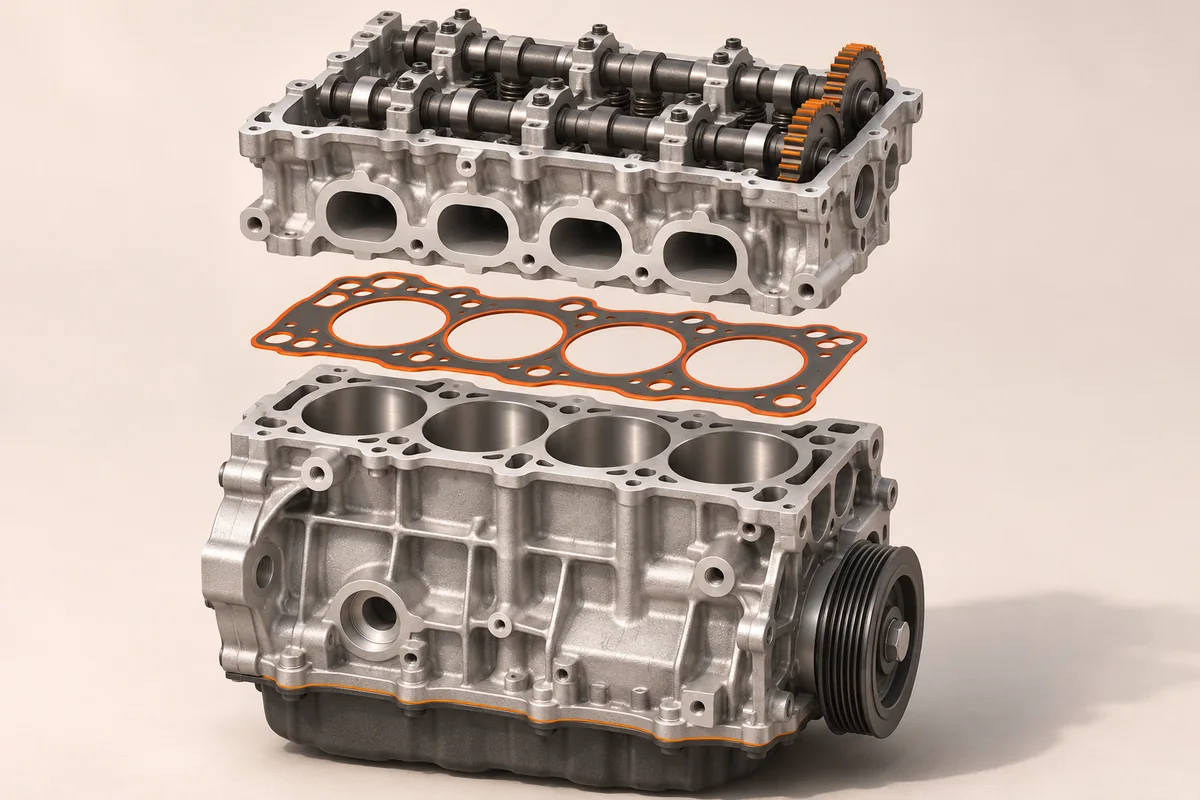
The head gasket seals the joint between the engine block and cylinder head. Around that joint are the cylinders, which contain combustion pressure, and passages that carry coolant and oil. The symptoms depend on where the seal fails and what can cross the damaged area. Coolant entering a cylinder can show up at the exhaust. Coolant reaching the oil raises a different concern, even if the tailpipe looks ordinary.
This helps explain why there is no dependable sequence of first signs. One owner may notice a coolant reservoir that needs attention repeatedly. Another may notice rough running after a serious overheat. Tell the technician which change you noticed first and what followed. If a hose failed and the temperature warning appeared before the engine began running poorly, that sequence gives the shop a reason to investigate both the original cooling fault and possible engine damage. Fel-Pro head and gasket diagnosis
Reading the coolant, oil, and exhaust clues together
| Observation | What it can tell you | What still needs to be established |
|---|---|---|
| Coolant level keeps falling when compared cold | The system is losing coolant | Whether it escapes outside the engine or enters it |
| White exhaust persists and coolant is disappearing | Coolant entering a cylinder is a possibility | The entry point and condition of the head and gasket |
| Oil on the dipstick looks milky or unusually cloudy | Coolant contamination deserves prompt attention | Whether coolant is present and how it reached the oil |
| Bubbling was visible in the reservoir | Gas in the cooling system is a clue worth reporting | Whether combustion pressure is leaking into the system |
| Rough running accompanies coolant loss | The shop has reason to investigate the cylinders | Whether the symptoms share a cause |
Compare coolant levels with the engine fully cold, parked in the same place, using the markings on the reservoir where visible. An empty parking space with no puddle does little to settle where the coolant went. An external leak can reach a hot engine surface and evaporate. Tell the shop about any wet area or dried trail you noticed as well as what you saw at the tailpipe. Fel-Pro on tracking coolant loss
Keep observations specific. Brief vapor on a cold start and a white cloud that continued after warm-up are different reports. So are residue confined to the oil filler cap and milky oil on the dipstick. If you already saw the latter along with coolant loss, leave the engine off and arrange diagnosis. Running it to take a better photo adds risk when the oil may be contaminated.
What a shop can test before removing the head
A cooling-system pressure test helps answer the first question a falling level poses. Under controlled conditions, the technician can check whether the system holds pressure and inspect for external leakage. Finding coolant escaping from a hose gives the shop a specific repair to assess. If no external source accounts for the loss, the next question is whether coolant is entering the engine. Fel-Pro on pressure testing
A technician may use a borescope to look inside the cylinders for coolant after controlled pressure testing. Coolant visible in a cylinder would narrow the search considerably. It would still leave the technician to determine which surface or seal allowed it in. Ask the shop to explain exactly what its test showed, especially if the proposed next step is to remove the cylinder head. Fel-Pro on cylinder inspection
Head removal can expose damage at the gasket, while machine-shop testing may be needed to identify a cracked head. Before authorizing disassembly, find out what the shop can establish now, what the machine shop will check, and when you will receive a revised estimate. A quote for gasket replacement can change materially if the head or block was damaged in a severe overheat. Fel-Pro on distinguishing a cracked head
When overheating is the cause, the consequence, or the only symptom
If the only symptom is a temperature warning, start with the cooling system. A failed hose, water pump, belt, or cooling fan can allow a serious overheat. Excess heat can then damage the engine's sealing surfaces. Conversely, an existing internal leak can deplete coolant and lead to overheating. The order affects the repair. If the original cooling fault survives a gasket replacement, the repaired engine is still exposed to the conditions that damaged it. Fel-Pro overheating and head damage guidance · Other causes of engine overheating
With a normal gauge but recurring coolant loss, schedule a leak diagnosis promptly. With active overheating, rapid coolant loss, or severe rough running accompanied by white exhaust, stop safely and arrange a tow. Cooling down at the roadside can bring the gauge back down while the underlying leak remains. There is no dependable mileage allowance for the trip home. Fel-Pro driving guidance
Common head gasket questions
What does a blown head gasket look like from outside? Much of the sealing area is hidden between the head and block. What an owner usually sees is an effect, such as disappearing coolant or unusual exhaust. An external photo alone may tell a mechanic little about the gasket itself.
Can the oil look normal with a leaking head gasket? Yes. A leak can involve a cylinder and a coolant passage while leaving the oil looking ordinary. Persistent coolant loss still deserves investigation even when the dipstick looks familiar.
Is a cracked head the same as a blown gasket? They are different failures. One involves the cylinder head itself and the other the seal at the joint. They can let coolant or combustion gases cross similar boundaries, which is why their symptoms overlap.
What information should I bring to the shop? Bring the history of any overheating event, the amount and frequency of coolant additions if known, and when you noticed exhaust or running changes. If a scan has already been performed, keep the stored codes and freeze-frame data for the technician before anything is cleared.
Check the references
Sources
Sources checked November 8, 2026. This guide is a synthesis of published information; it has not been independently reviewed by a certified mechanic. Follow the service information for your exact vehicle. Read our editorial policy.