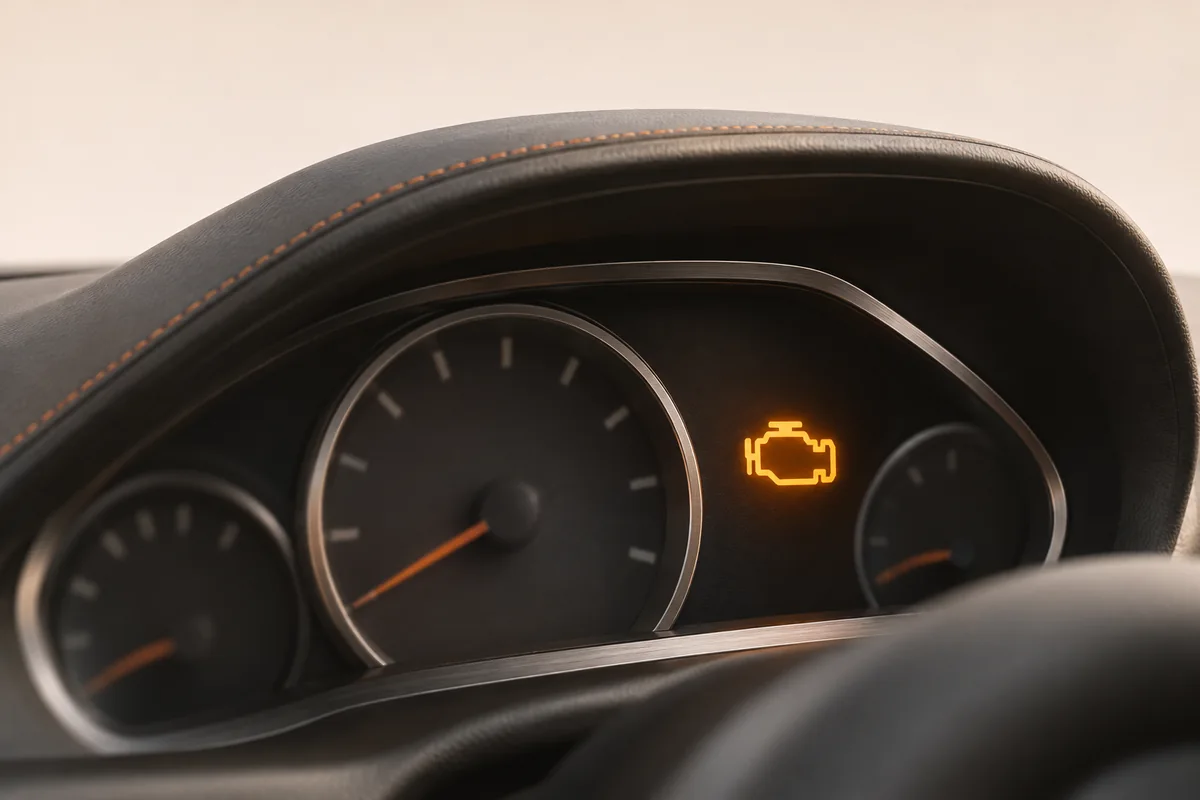
P0300 means Random/Multiple Cylinder Misfire Detected. One or more cylinders failed to deliver power consistently, and this code doesn't assign the problem to a particular cylinder. It doesn't tell you to buy spark plugs, coils, or injectors. The most useful next piece of information is the pattern: which cylinders were affected, under what conditions, and whether the engine is still running rough.
If the check engine light is flashing and the car is shaking or losing power, pull over when it's safe, shut the engine off, and arrange a tow. Don't accelerate again to see if it clears up. A flashing check engine light during a misfire can warn of a risk to the catalytic converter.
Read P0300 alongside the other codes
A misfire is a combustion event that contributes less power than it should. You might feel an uneven beat at a stop or a stumble when you press the accelerator. Either can fit P0300. A scan taken later, while the car is idling smoothly, can still contain evidence from the earlier event.
Save the complete scan before anyone clears it. Look for cylinder-specific codes alongside P0300: for example, P0302 identifies a detected misfire on cylinder No. 2. That gives the technician a place to focus, although it still doesn't name a failed part. Ford's OBD system summary distinguishes the general misfire code from cylinder-specific ones. If your scanner displays P0300-00, record the whole entry as shown. The base code still directs attention to misfire; use service information for the vehicle to interpret the full display.
Keep any available freeze frame, too. This is a snapshot that may include engine speed, temperature, and load. Check which fault the snapshot belongs to, especially if there are several codes. A frame associated with another fault shouldn't be mistaken for a precise record of the moment you felt the car shake.
The circumstances can narrow the search
A useful service description might be, It stumbled going uphill after the engine warmed up, but idled evenly when I pulled over. That tells the shop why an idle check alone may miss the complaint. Give the conditions you actually observed; there's no need to reproduce a severe misfire for a better description.
| Pattern in the history or scan | What it helps the technician decide |
|---|---|
| Misfire counts, where available, repeatedly favor one cylinder | Examine what is specific to that cylinder: its ignition path, fuel delivery, and mechanical condition. |
| Several cylinders show misfires along with a lean-mixture code | Investigate whether a shared air or fuel problem could account for both findings before ordering several coils. |
| The stumble occurred under load, but the engine idles smoothly | Choose a test capable of evaluating ignition performance under the conditions that matter. |
| The complaint began immediately after engine service | Inspect connections and parts disturbed during that work and compare with any codes recorded beforehand. |
The word random can be misleading. It doesn't mean every cylinder misfired equally, that the fault moves on every trip, or that diagnosis is a matter of guessing. A cylinder that consistently accumulates more misfires than its neighbors is useful evidence even when P0300 is the code printed at the top of the report.
Why a coil test may tell only part of the story
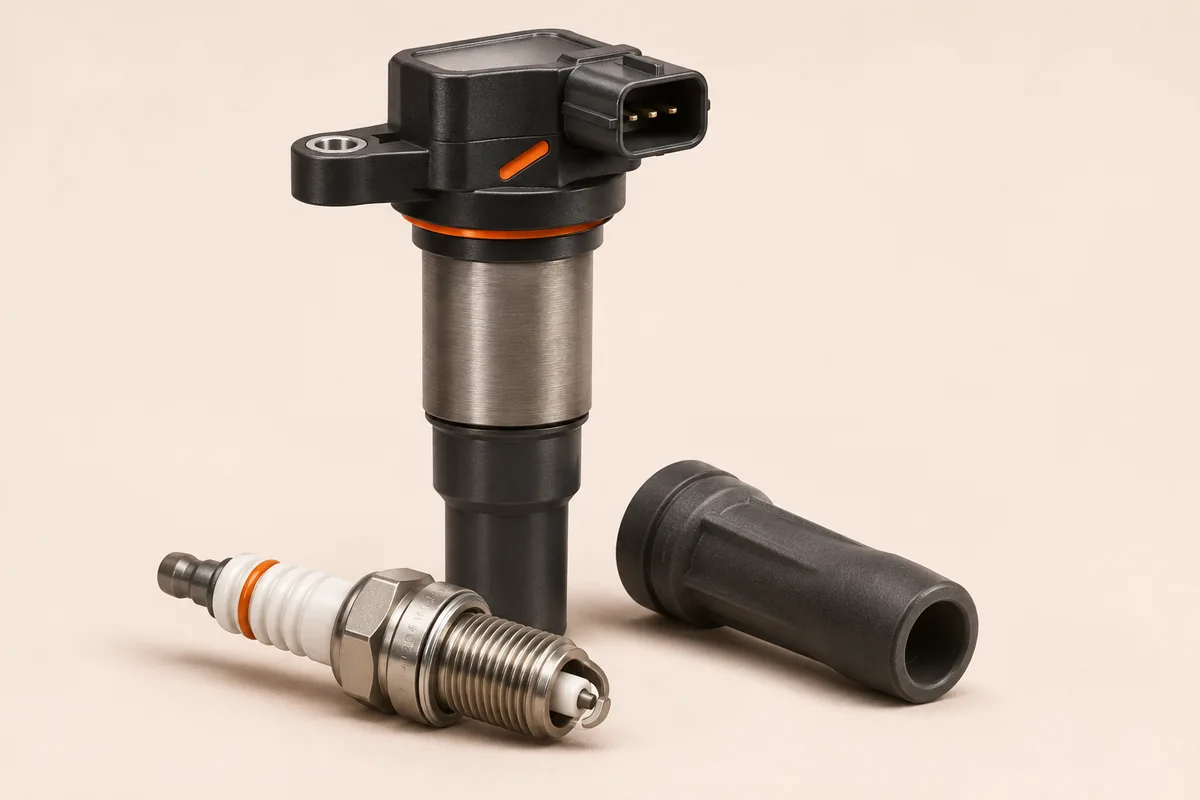
On a gasoline engine, the coil has to deliver spark through a path that includes the boot and spark plug. Damage along that path can allow the spark to travel somewhere it shouldn't. NGK's ignition coil guidance explains why the coil, boot, and plug should be considered together. If a shop recommends a coil, ask what it found at the boot and plug on that cylinder. A visible spark track or damaged terminal is more informative than the code description alone.
An electrical resistance reading also has limits. A coil can pass a static check yet fail while the engine is working harder. Innova's coil testing guide notes that the appropriate test depends on the ignition design. The useful question is whether the technician found a fault in the coil's output, the path to the plug, or the wiring and control that make the coil operate. Those findings lead to different repairs.
When the evidence points beyond ignition
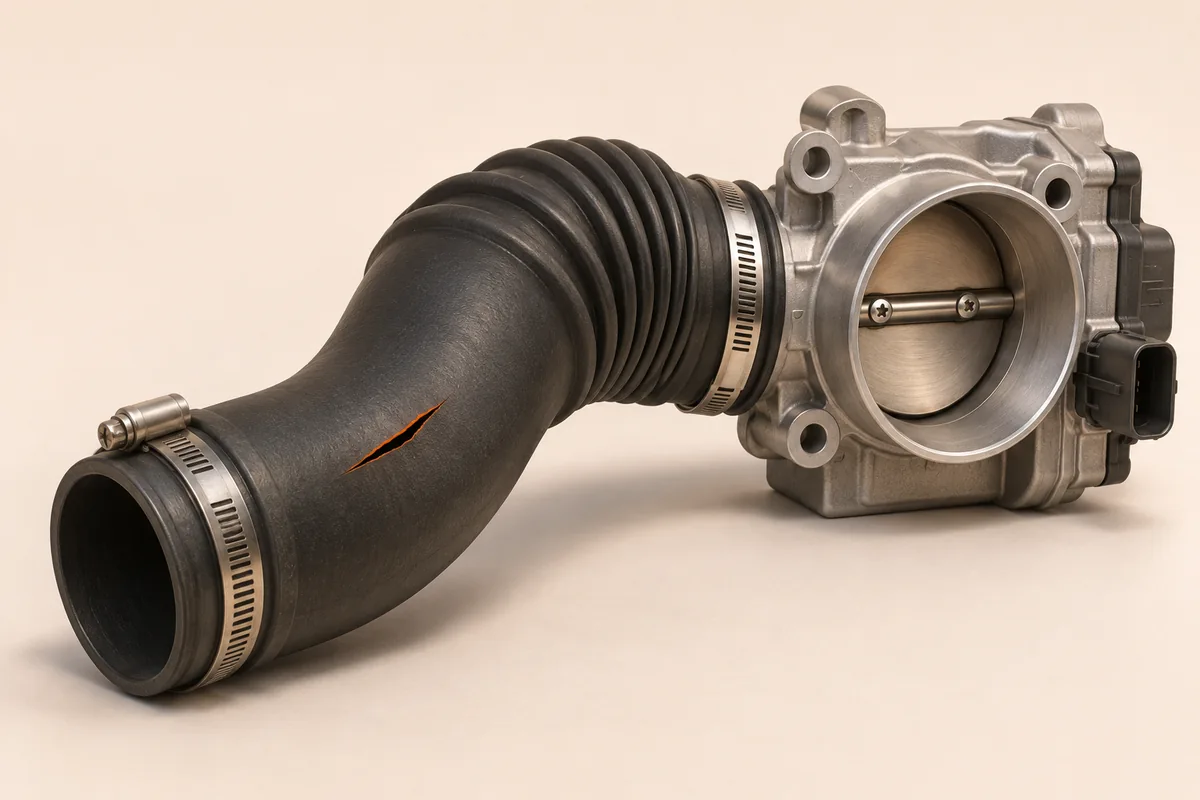
Combustion also depends on the air and fuel entering a cylinder and the cylinder's ability to compress that charge. If the ignition checks don't explain a persistent misfire in one cylinder, checking injector operation and cylinder compression can be more productive than trying another brand of coil. If several cylinders are affected, the technician can look for a common cause. A companion P0171 lean code, for instance, makes fuel corrections and intake leaks relevant to the investigation; it doesn't prove a leak is present.
The same reasoning applies to a Chevy Silverado, a Ram 1500, a Nissan, or a Ford. The engine fitted to the vehicle determines the cylinder layout, ignition design, available scan data, and suitable tests. Give the shop the model year and engine as well as the badge. A repair that solved P0300 on someone else's truck is a useful comparison only if the evidence on yours supports it.
If the code comes back after repair
Compare the new scan with the saved one. Did the same cylinder begin accumulating misfires again? Did the complaint return during the same kind of acceleration, or is the engine now rough at idle? Those distinctions help the shop decide whether to revisit the original diagnosis or investigate a different pattern. A smooth idle at pickup is encouraging, but it doesn't verify a repair for a fault that occurred only under load.
Frequently asked questions
Does P0300 mean I need all new coils? No. Ask which coils failed a relevant check. If the estimate also includes scheduled spark plug maintenance, have the shop identify that separately from the repair supported by the misfire diagnosis.
Can I have P0300 without feeling a misfire now? Yes. The trouble may have occurred under conditions that aren't present now. Preserve the codes and freeze frame while they're available.
What's the difference between P0300 and P0301? P0300 describes the broader misfire pattern. P0301 identifies cylinder No. 1 as having misfired. If both appear, keep both on the service request; neither establishes why combustion failed.
Check the references
Sources
- Ford 2024–2025 MY OBD System Operation Summary for Gasoline Engines
- NGK Ignition Coils Technical Resources
- Innova How To Test a Vehicle’s Ignition Coil
Sources checked November 8, 2026. This guide is a synthesis of published information; it has not been independently reviewed by a certified mechanic. Follow the service information for your exact vehicle. Read our editorial policy.