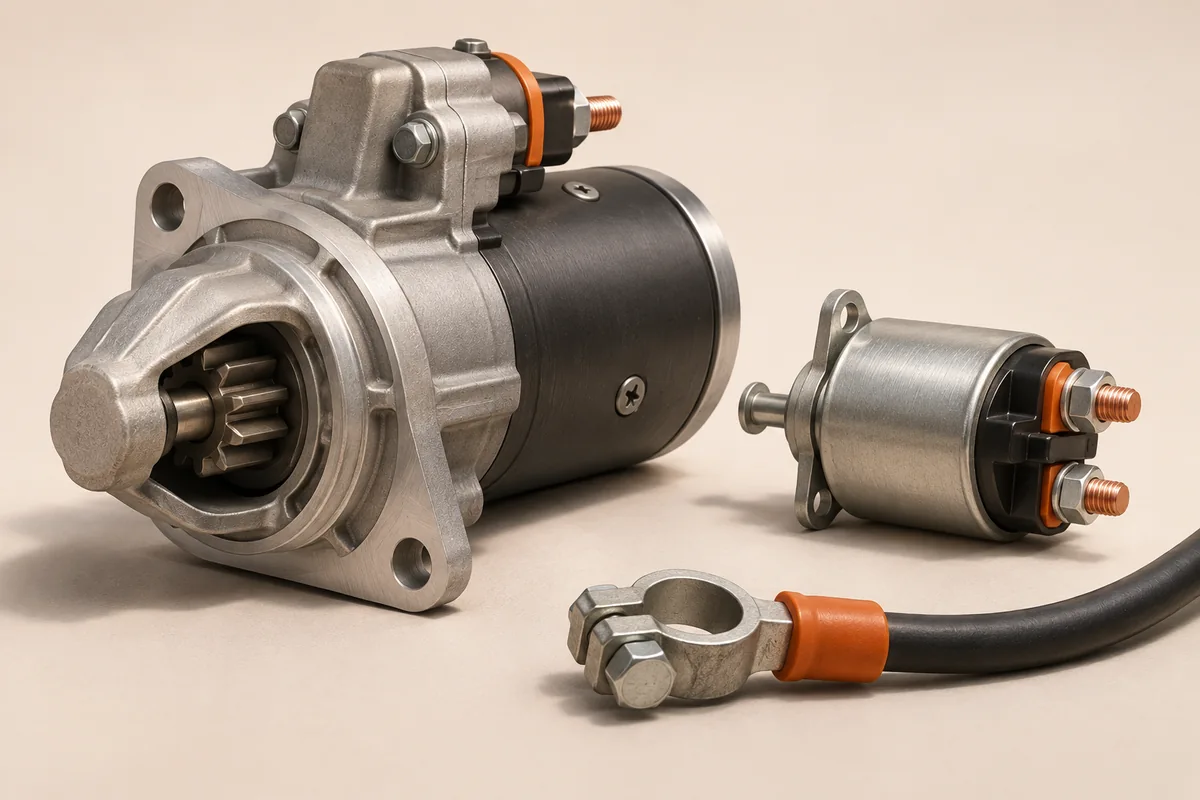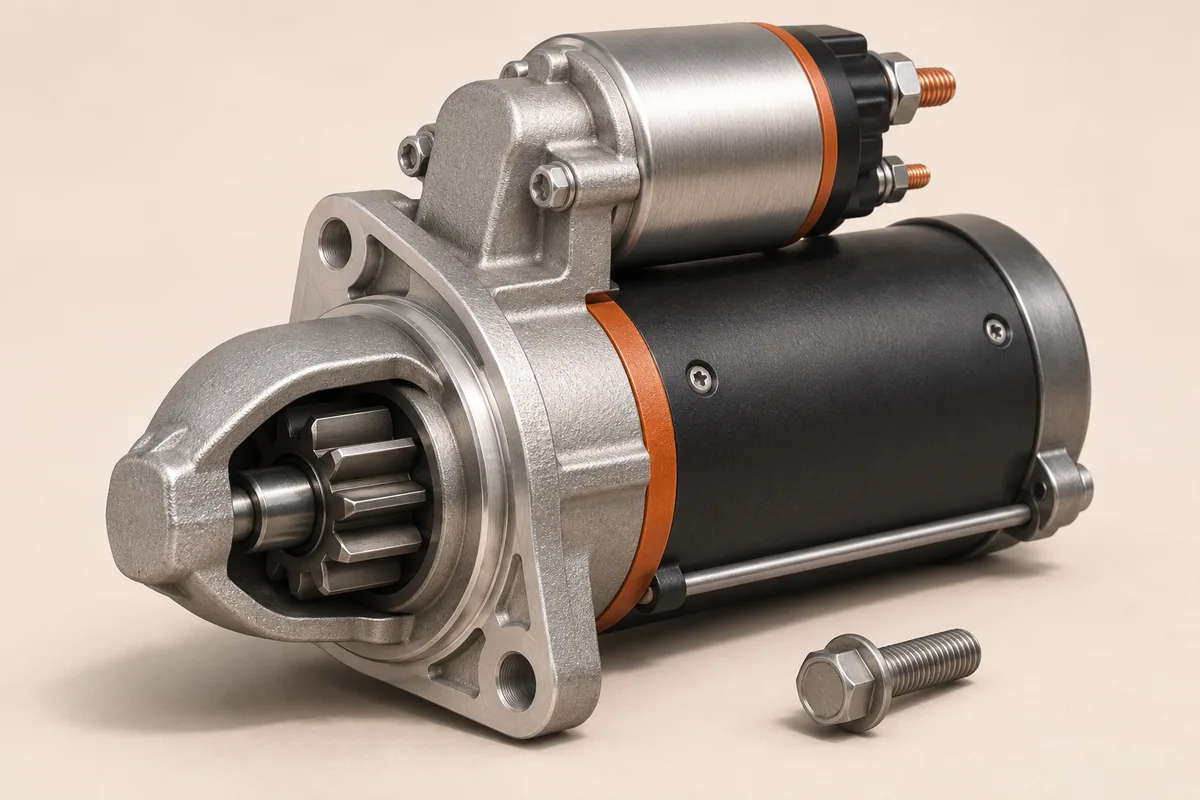
Replacing a starter costs $565–$796 in RepairPal's broad US estimate, updated September 3, 2026. Its published parts range is $375–$516, and labor is $191–$280. These figures exclude taxes and fees, don't reflect your specific location, and may leave out related repairs. For a car that won't start today, ask the shop for two things: an installed price for your exact vehicle if the starter has failed, and a pickup time based on when the correct part can be in hand.
Before you price a starter, describe what the engine does
The starter's job is to turn the engine when you request a start. If you hear the usual rhythmic cranking sound but the engine never fires and runs, describe it as cranks but won't start. A replacement starter generally isn't the answer to an engine that is already turning at its normal starting speed. If you hear a click or silence and the engine doesn't turn, describe it as no crank. That puts the starting circuit in the picture without condemning the motor.
HELLA's starter troubleshooting guidance identifies electrical connections, the solenoid that engages the starter, the motor, and the drive mechanism as possible trouble spots. The shop needs to check the battery and both the power and ground paths. Working dash lights don't prove the battery or connections can deliver what the starter needs. A technician can check the supply and start command during the failed attempt before recommending an assembly.
If the fault comes and goes, tell the service writer when it happens. A car that cranks on the first cold start but only clicks after a fuel stop presents a different testing opportunity from one that never cranks. Note whether the engine turned and what you heard; there's no need to keep attempting starts to produce a recording. If you hear grinding, stop trying and report the sound so the shop can check engagement before quoting a motor alone.
What the parts price buys
Ask the shop to identify the starter assembly by part number and say whether it's new or remanufactured. A listing photograph is a poor way to confirm fit: starters that look mechanically similar can have different applications. Supply the VIN, year, model, and engine when requesting prices. For a Honda CR-V, Civic, or Accord, a price listed simply for a Honda starter is too broad to be useful. The same applies to a Ford F-150 quote that doesn't identify the year and engine.
If one shop offers a repair and another a replacement, find out what each will return to you. Repairing a specific fault in the original assembly, fitting a replacement assembly, and repairing a bad cable are three different jobs. When a shop proposes work on the original starter, ask whether removal, testing, reinstallation, and a check that it engages correctly are included. If it proposes a remanufactured unit, clarify whether you must return the old one for a deposit credit.
Why the labor and turnaround vary
Starter placement determines what the technician has to move for access. The cost of removing and reinstalling those items can matter more than the apparent size of the starter. A local shop can look up the operation for your specific engine and apply its labor rate. You can't reliably turn the national labor dollars into a time estimate by dividing by a rate you found elsewhere.
For scheduling, ask when the technician can confirm the diagnosis, whether the supplier has the matching part, and when the shop expects to complete a start check. Those answers distinguish hands-on replacement time from the time your car occupies a spot in the lot. If the shop can't reproduce an intermittent no-crank, agree on the next diagnostic step before authorizing a starter on the chance that it will help. If the fault is confirmed and the part is on the shelf, the shop can give you a firmer pickup window.
Compare quotes before the tow truck drops off the car
If the car is stranded, a phone estimate may have to be conditional. Ask what you would owe if testing finds a battery or connection fault and no starter is installed. This is particularly useful when choosing where to tow the vehicle: the cheapest advertised installation doesn't tell you what the shop will charge to find a different problem.
| Ask the shop | Why the answer matters |
|---|---|
| What is the diagnostic charge, and is it credited toward installation? | Separates the price of identifying the failure from the price of fixing it. |
| Which part number and condition does the quote specify? | Lets you compare like parts and confirm availability before delivery. |
| Does labor include everything that must come off for access? | Distinguishes a complete installation from a starting price. |
| What is due at pickup, including fees, tax, and any core credit? | Gives you a figure you can compare with a second written quote. |
| What happens if the replacement fails? | Establishes the actual terms for the part and repeat labor without assuming either is covered. |
If the shop finds another problem once it has access, ask for the finding and the revised price before approving extra work. For instance, damage where the starter engages the engine is a separate issue from the price of a starter assembly. You should be able to tell which work the original authorization covered and what the technician discovered afterward.
Starter replacement questions
How long does a car starter last? Mileage alone doesn't tell you how many starts a motor has made or what condition it's in. There isn't one replacement interval that answers the question for every car. An occasional failure to crank warrants testing even if the car has relatively few miles.
Does a click mean I only need a solenoid? No. A click tells you something responded to the start request. It doesn't establish whether the battery, connections, solenoid contacts, or motor can complete the job.
Can a shop quote just the price of a new starter? Yes, but make clear you want a new unit for your VIN and ask whether the figure is for the part alone. Compare it with the parts line on a written estimate, not with the entire installed total.
What should I check when I pick up the vehicle? Confirm the invoice identifies the installed part, the work performed, and the repair terms. If the original failure happened only under certain conditions, ask whether the shop was able to verify starting under those conditions and what to do if the symptom returns.
Check the references
Sources
Sources checked November 8, 2026. This guide is a synthesis of published information; it has not been independently reviewed by a certified mechanic. Follow the service information for your exact vehicle. Read our editorial policy.