If the engine doesn't turn when you request a start, the car has a no-crank problem. Working headlights or a radio don't rule out a weak battery or poor cable connection: turning the engine takes much more current than powering those accessories. The next useful clue is what happens during the start request. Silence, rapid clicking, one solid click, and a motor whirring without turning the engine point to different checks.
If you hear the engine turning at its usual rhythm but it never catches and runs, describe that as cranks but won't start. That's a different complaint. Telling roadside assistance which sound you heard can save a detour into testing a starter that's already turning the engine.
Listen for engine movement first
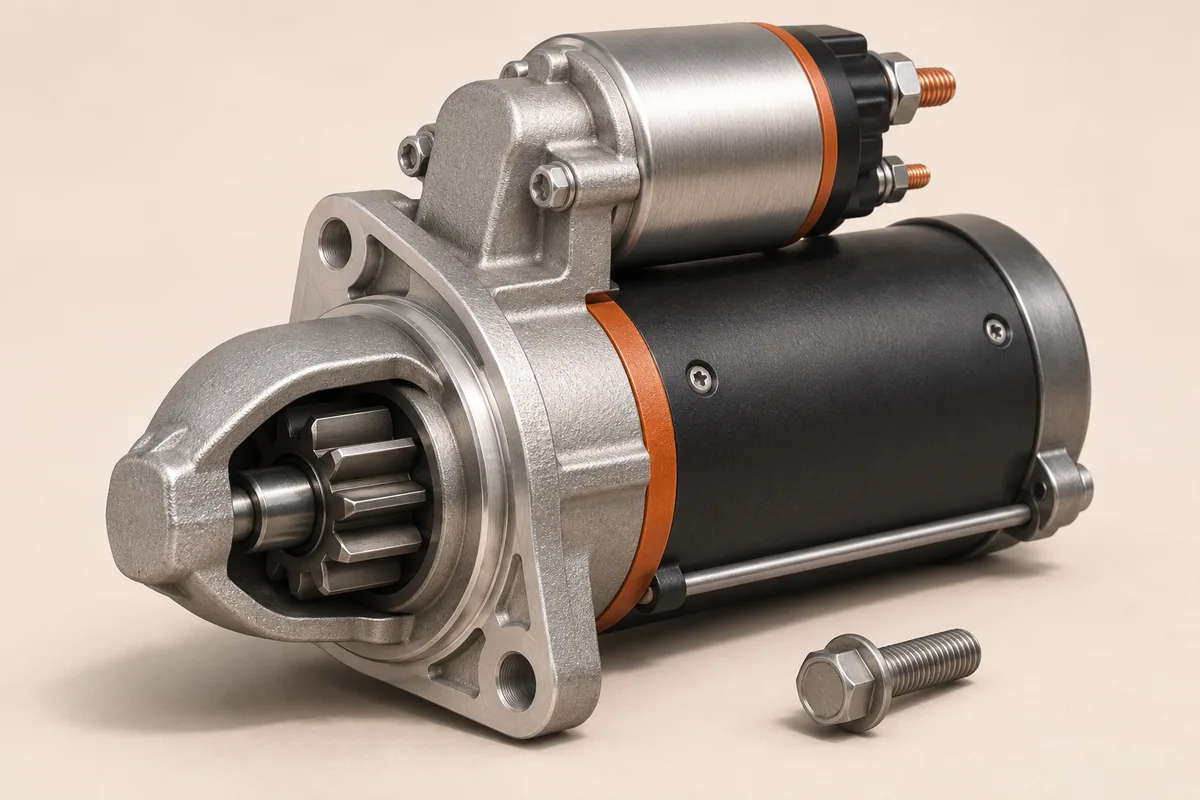
Think about the sound your car normally makes just before it starts. That rhythmic turning sound is cranking. If you hear it, but much slower and more labored than usual, report a slow crank. If instead you hear a smooth, higher-pitched whir without the familiar engine rhythm, the starter motor may be spinning without engaging the engine. DENSO's starter troubleshooting reference distinguishes these conditions because a motor that spins, a motor that labors, and a motor that never operates don't call for the same diagnosis.
| What happens when you request a start | What it suggests checking |
|---|---|
| Rapid clicks, sometimes with pulsing or dimming lights | Can the battery and its connections maintain power when the starter is called on? |
| One solid click, no engine movement | A switching component may have operated. Check the battery and cable path as well as the solenoid and starter. |
| Silence, dash still lit | Did the car recognize the start request and enable the starter? Battery and main connections still need checking. |
| A free-spinning whir, no engine rhythm | Check whether the starter drive engages the engine. Report the whir rather than describing the car as completely dead. |
| Normal rhythmic cranking, engine never fires | Report a crank-no-start. Testing why the engine doesn't run takes priority over replacing the starter. |
You don't have to keep trying until you're certain which row fits. One description of the initial attempt, including whether the dash went dark or stayed bright, is useful. Interstate Batteries cautions that repeated starting attempts can overheat the starter.
Why bright lights don't settle the battery question
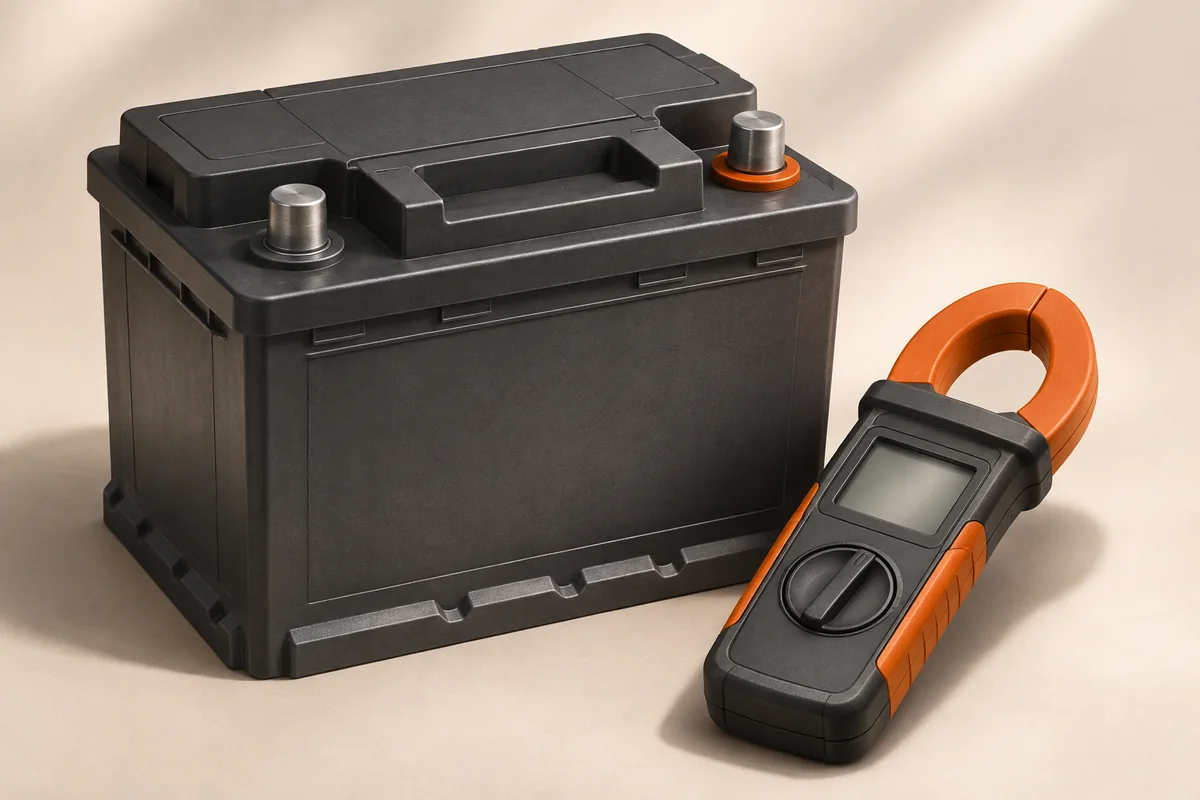
Imagine a battery connection that passes enough current for the dash but has enough resistance to interfere with starting. Everything may look normal until you press Start. A battery with inadequate charge or reduced starting capacity can produce a similar complaint. From the driver's seat, the two can look and sound much the same.
A shop can separate those possibilities by checking the battery under load and measuring voltage loss along the starting cables, including the ground return path. The load test asks whether the battery can deliver power. The cable test asks how much of that power is lost on the way through a connection or cable while current flows. A normal-looking terminal or a battery voltage reading taken with everything off doesn't answer both questions. DENSO describes battery, cable, and voltage-drop checks; the technician should use the specifications for your vehicle.
If someone has already pronounced the battery good, bring the test result and say when the test was done. A recent load test is better evidence than the age of the battery, but it still doesn't test every connection between the battery and the starter.
One click or silence with a tested battery
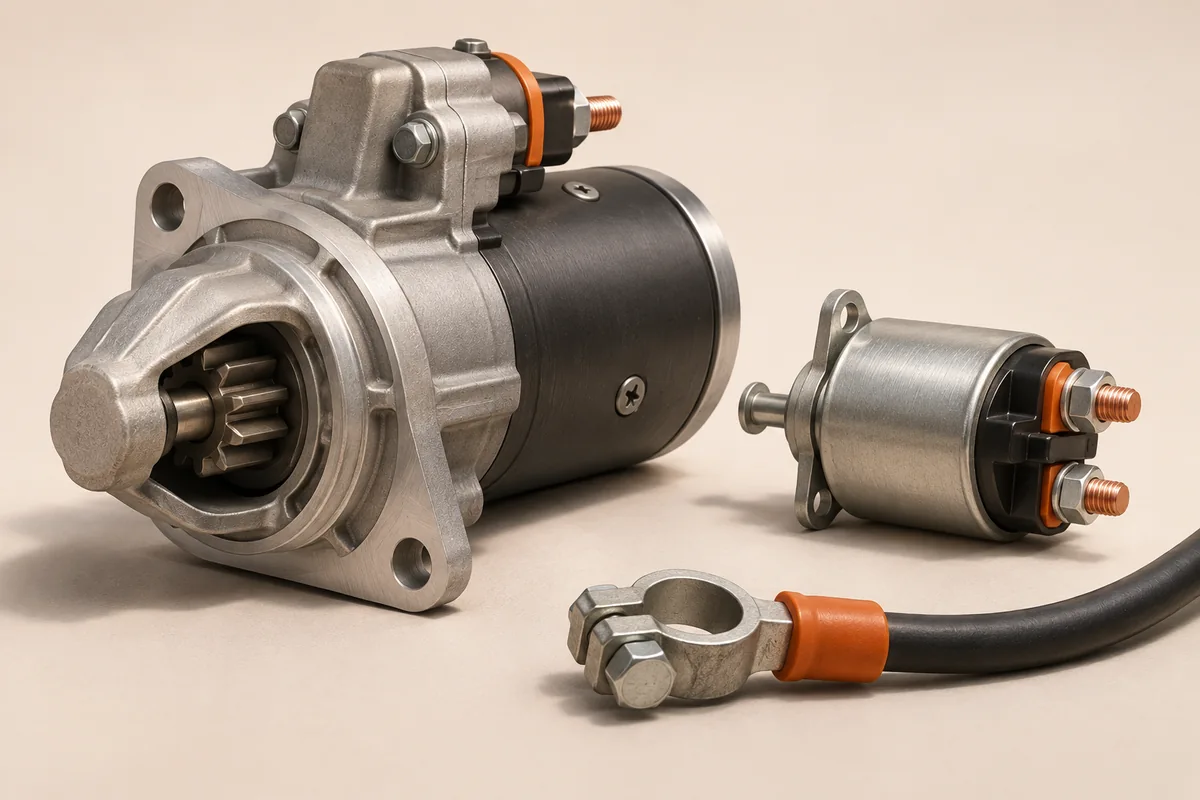
A single click often draws suspicion to the starter. It tells you something moved or switched; it doesn't tell you that sufficient current reached the starter motor or that the engine was free to turn. Once the battery and cables check out, the technician can verify the start command, evaluate the solenoid and motor, and consider a mechanical problem if the engine won't rotate.
With silence, check the ordinary starting conditions from the driver's seat. For an automatic, make sure the selector is fully in Park and follow the owner's manual for the brake pedal and start control. For a manual, make sure the clutch pedal is fully depressed as directed. Note a key, security, brake, or gear-position message if one appears. Its wording may help explain why the car didn't authorize a start.
If the normal starting conditions are met, a shop can trace the control circuit, including the relevant fuse or fusible link and switches. Ask whether the starter actually received a command during the failure. A missing command calls for a different repair from a motor that received the command and adequate power but didn't turn.
What a jump-start or a cold morning changes
A successful jump tells you that adding electrical support changed the outcome. It doesn't settle why support was needed. If the battery was recently replaced and the problem has returned, ask for battery, connection, and charging checks before buying another one. Interstate explains how a replacement battery can temporarily mask another problem.
An unsuccessful jump is also worth describing precisely. Did nothing change? Did rapid clicking become a single click? Did the engine begin cranking normally but still fail to run? Only the last result moves the immediate complaint into crank-no-start territory. A failed boost alone proves neither that the battery is good nor that the starter is bad. Use the owner's manual for any jump-start decision and connection points, or have roadside assistance handle it.
For an intermittent problem, note how long the car sat and whether the engine was cold or had just been running. A car that won't crank on the first start after a cold night presents a different testing opportunity from one that goes silent at a warm restart after a short stop. If it starts by the time it reaches the shop, give the technician that timing, the sound you heard, and any test or boost results. Ask whether testing can be arranged when the failure usually occurs.
Frequently asked questions
The dash lights stayed bright and I heard one click. Can I order a starter? Not on that evidence alone. Have the high-current supply, ground, and starter command checked. Those results give a starter recommendation more weight than the click itself.
Could it still be a connection problem with a new battery? Yes. Replacing the battery doesn't prove its terminals, cables, or engine ground can carry starting current. Mention if the trouble began just after installation so those connections get attention.
What should I say when I call for a tow? Start with whether the engine turned. For example: The dash lit up, I heard rapid clicks, and the engine never turned. A boost didn't change the sound. Add where the car is parked and any dash message so the operator knows both the symptom and how to reach you.
Check the references
Sources
- DENSO Starter Troubleshooting
- Interstate Batteries Why My Car Won’t Start If the Battery’s Still Good
Sources checked November 8, 2026. This guide is a synthesis of published information; it has not been independently reviewed by a certified mechanic. Follow the service information for your exact vehicle. Read our editorial policy.