A squeak over a bump can come from a joint or bushing as the suspension moves. A distinct clunk can come from play in a joint, a sway-bar link, or loose mounting hardware. The most useful clue is which movement coincides with the sound. A knock as the left front wheel enters a driveway gives a technician a better starting point than “the suspension is noisy.” If loose steering or a sudden change in handling comes with the noise, pull over safely and arrange a tow. MOOG suspension noise guide · MOOG ball joint guide
Listen for when the noise starts and stops
Think back to the last time you heard it during ordinary driving. Did it happen once as the wheel hit the bump, again as the body settled, or repeatedly across a stretch of broken pavement? If the sound continued on smooth pavement, did it follow road speed? These details help distinguish something responding to suspension travel from a sound that continues whenever the wheels turn.
| What you noticed | Useful detail to report | Where the inspection can begin |
|---|---|---|
| One hard clunk entering a driveway | Which wheel crossed the lip when you heard it | Joints, links, and mountings near that end |
| A creak as the body rises or settles | Whether it lasts through the movement or occurs at one point | Bushings and joints moving under load |
| A light rattle over several small bumps | Whether it repeats with each bump and seems inside or outside the cabin | Loose items, hardware, and broken or missing components |
| A knock while turning into a parking space | Whether you also heard it while turning on level pavement | Front steering linkage as well as suspension components |
| A steady hum on smooth pavement | Whether its pitch follows vehicle speed | Wheel bearing and tire noise warrant a separate assessment |
There is no need to find a bigger bump to make the sound louder. If it was most audible on the first damp morning after a dry spell, or only with passengers in the rear, tell the shop that. An intermittent squeak may be quiet when the technician first moves the car. Your description gives the shop conditions it can account for during inspection.
A front clunk and a rear rattle call for different checks
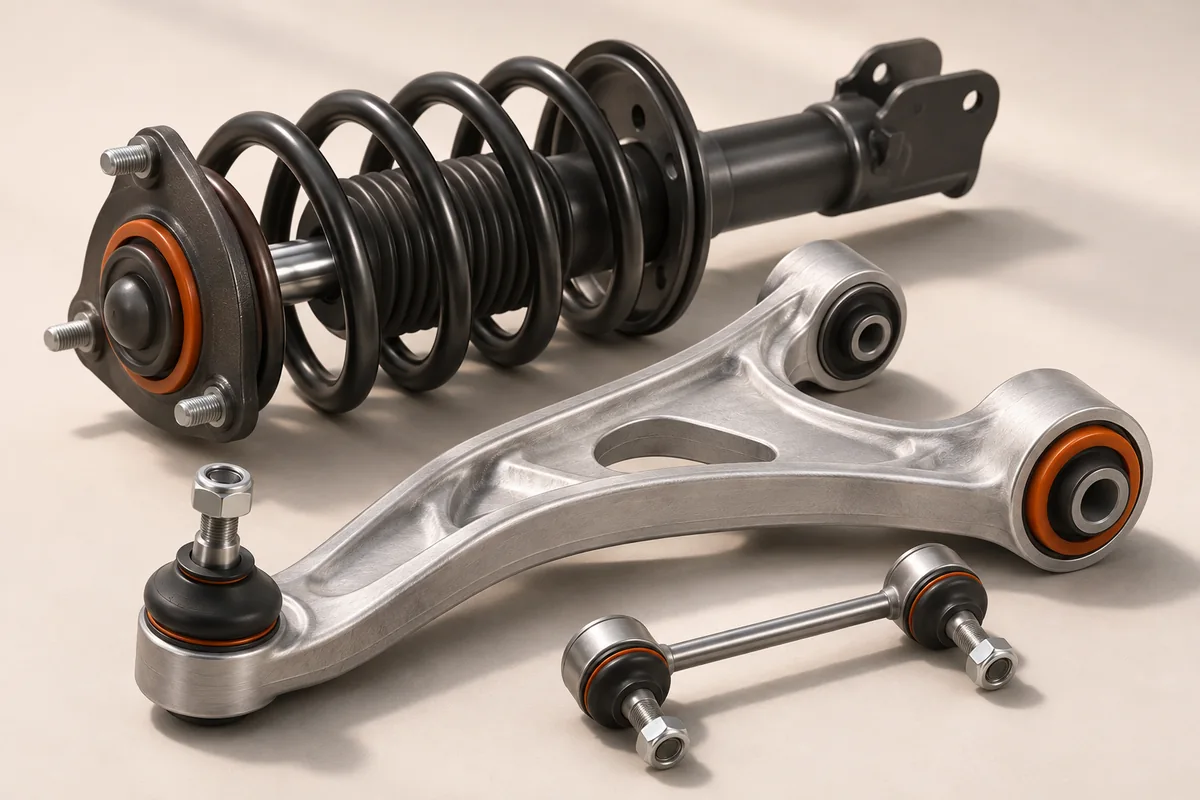
At the front, steering and suspension parts move close together. A knock heard on a turn across uneven pavement leaves two useful leads. It could follow steering movement, or it could follow the rise and fall of a wheel. A technician can examine tie-rod ends, steering rack bushings, ball joints, and sway-bar links for movement that matches the complaint. MOOG suspension inspection guidance
At the rear, start with what you can reach while parked. Secure loose cargo and check that the spare tire and its tools, if fitted, are secured in their storage locations. Remember whether the sound arrived as the rear wheels crossed the bump. Hearing a thud behind the driver's seat and feeling an impact when the rear wheel crosses are two different observations. Report both if you can.
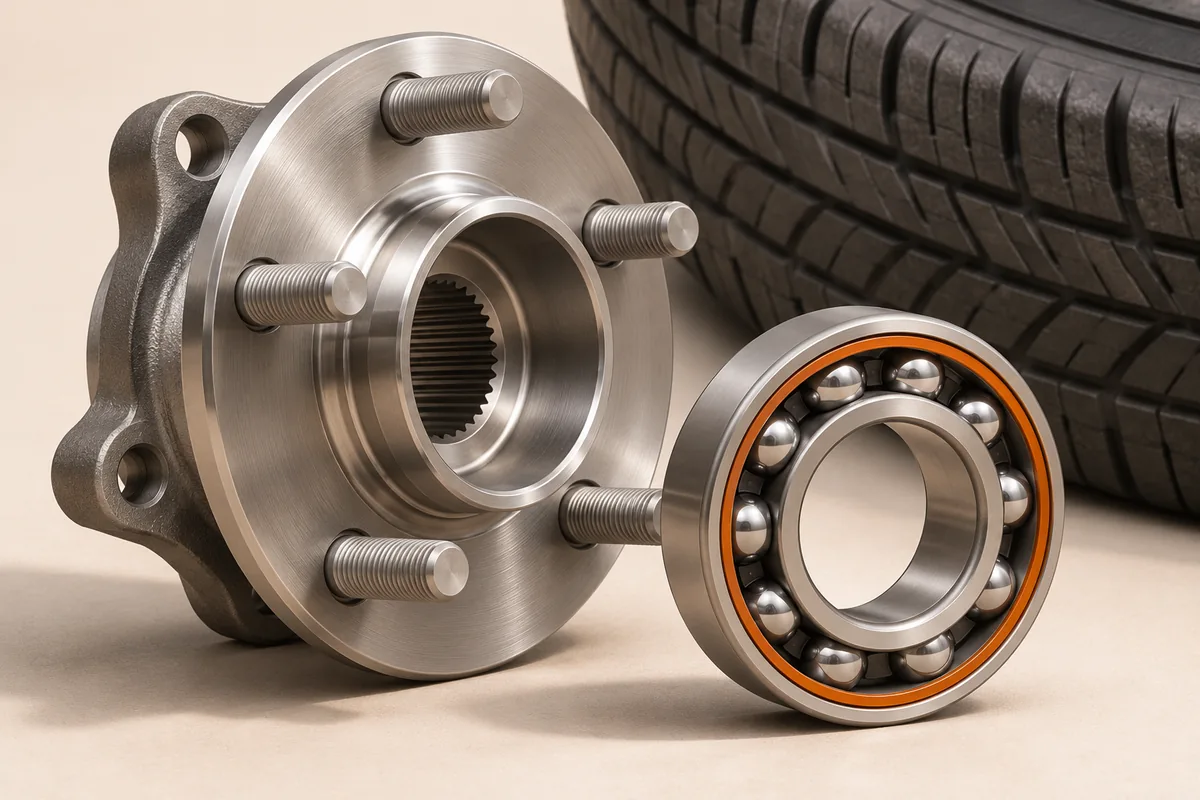
A hum that builds with speed and continues between bumps deserves its own description. If you hear a thud at a driveway entrance and a hum farther down the street, give the shop both complaints. It can investigate whether the car has two separate issues. Wheel bearing and tire noise differences
What a loaded suspension inspection can reveal
The car's weight changes how some parts sit against one another. In a professional dry-park inspection, the vehicle rests on a drive-on rack while an assistant moves the steering and a technician observes the components. This gives the technician a chance to see a link shift, a mounting move, or a joint knock at the same instant the sound occurs. The next step is to evaluate that movement against the vehicle manufacturer's inspection method and specifications. MOOG dry-park inspection
A ball joint shows why the method matters. It allows suspension movement while locating the wheel, and wear can let it knock over bumps. A damaged protective boot can admit contamination and contribute to a squeak. The suspension design determines how the joint should be supported or unloaded for a wear check. A shop can document boot damage, measured play where applicable, and any related tire wear as distinct findings. MOOG ball joint inspection
Deciding how urgently to act
A new noise with steering that suddenly feels loose, or a car that becomes difficult to keep on course, calls for stopping as soon as it's safe. Tell roadside assistance about the steering change. A squeak with otherwise predictable handling gives you time to describe the conditions and arrange inspection, but sound level alone cannot tell you how worn a joint is. MOOG signs of ball joint wear
When the shop calls, ask which side and component it identified, what the technician observed, and whether the finding accounts for the noise you reported. If the estimate lists both struts and several bushings, ask which item made the sound and what finding supports each additional part. That leaves room to address a separate safety problem the inspection uncovered while keeping track of the original complaint.
Common questions about a squeaky suspension
Will silicone spray fix a suspension squeak? A quieter joint after spraying still leaves questions about wear, boot damage, and whether that component calls for lubrication at all. Have the source identified first. Any lubricant and application method should suit the particular component.
Does a front-end clunk mean I need struts? A worn ball joint or a loose link can produce a similar complaint. Ask the shop to identify where it observed abnormal movement or damage before pricing a strut replacement.
What if the shop can't hear the rear clunk? Describe a recognizable location and the exact point where it happened, such as the rear wheel dropping off the far edge of a driveway apron. Mention whether the trunk was loaded and whether you heard one impact or several.
Is a recording worth bringing? A passenger's recording can help convey the rhythm of a faint rattle or distinguish a knock from a creak. Add the wheel location and road condition you recall. The technician still needs to connect what the microphone picked up to a specific part.
Check the references
Sources
Sources checked November 8, 2026. This guide is a synthesis of published information; it has not been independently reviewed by a certified mechanic. Follow the service information for your exact vehicle. Read our editorial policy.