A worn wheel bearing can produce a low hum, rumble, or growl that builds as the car gains speed and changes volume through a bend. Tire tread can make a remarkably similar sound. The most useful clues are what changes the noise and whether the car still steers normally. A new, persistent hum warrants prompt inspection. Grinding accompanied by wheel wobble, loose steering, or difficulty controlling the car calls for pulling over safely and arranging a tow. Timken wheel hub bearing symptoms
Listen for what the sound follows
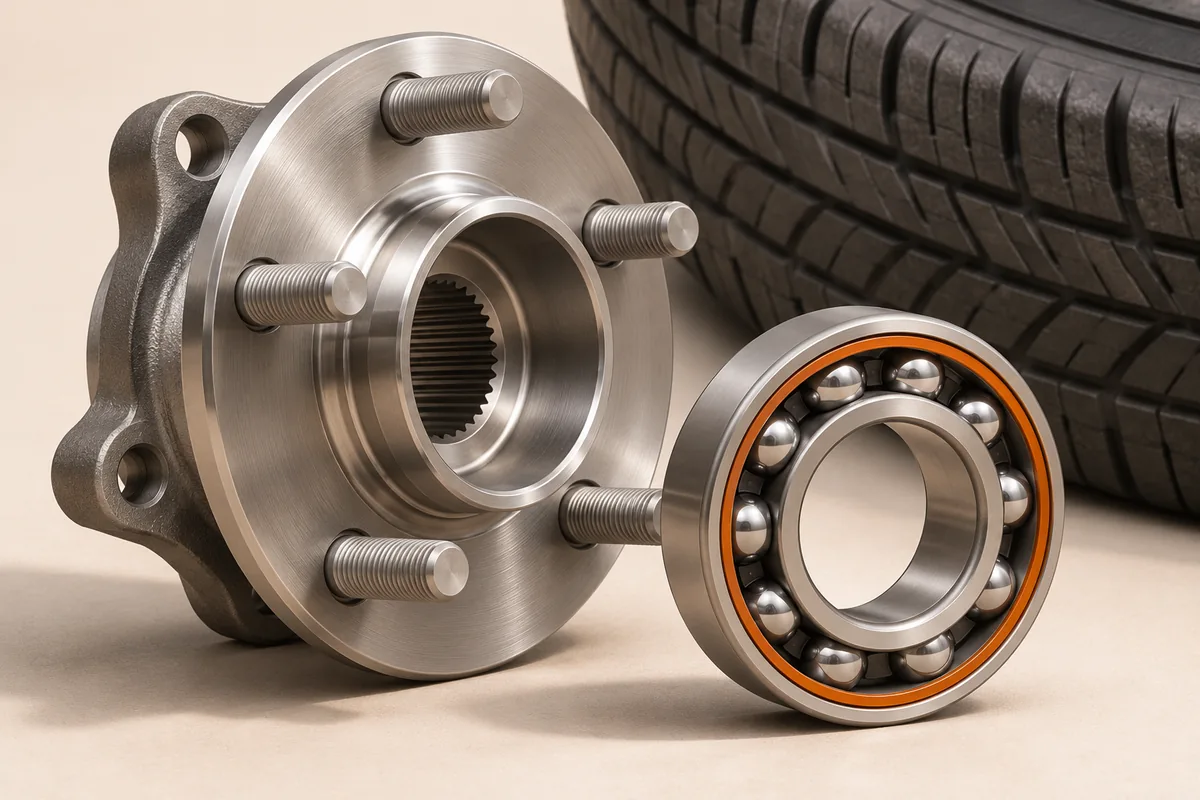
A bearing allows the wheel to rotate while carrying load. When a bearing becomes noisy, you might first hear a drone on a familiar stretch of road. As road speed increases, the note may rise or the rumble may get louder. It can be hard to pick out at lower speeds. There is no particular speed at which a hum identifies a bad bearing. Timken technical guidance
Think back to the drive when you heard it. Did the note keep rising with vehicle speed even as the transmission shifted and engine speed dropped? That observation helps direct attention toward parts that rotate with the wheels, including the tires and parts of the drivetrain. If you can hear the same sound while the car is parked with the engine running, a rotating wheel bearing cannot account for that stationary sound.
Distinguish a continuous noise from an event. A growl that lasts the length of a smooth block is a different complaint from one knock each time a wheel crosses a pavement joint. If there are two sounds, describe them separately. For a knock tied to bumps, see the guide to suspension clunks and squeaks.
Why a turn can change bearing noise
A bend shifts some of the car's load toward the outside wheels. That change can make a noisy bearing more audible in one direction and quieter in the other. If you have noticed this on an ordinary curve, tell the shop the direction of the turn, what happened to the sound, and whether the pavement also changed. There is no need to weave across a lane or make a special high-speed run. Timken bearing symptoms
A left-hand curve that makes a hum louder gives a technician a condition to investigate. It leaves open which wheel produced it. Both the front and rear wheels on the outside of the curve carry load, and vibration can travel through the body or frame. A passenger pointing to the rear seat and a driver pointing toward the dash may be describing the same noise. Have the affected corner confirmed before ordering a hub. MOOG wheel-end bearing diagnosis
Comparing the pattern with tire and drivetrain noise
| What you noticed in normal driving | Where it directs the inspection |
|---|---|
| The drone changes abruptly where coarse pavement gives way to smooth asphalt at about the same speed | Listen for tire tread interacting with the road and inspect the tread for uneven wear. |
| A rumble follows road speed across several surfaces and repeatedly changes volume on bends | Include the wheel bearings in the inspection and compare all relevant corners. |
| There is a series of clicks during a sharp parking-lot turn | Check for a CV-joint problem, especially if the complaint is a distinct click with each rotation. |
| A clunk occurs as you ease on or off the accelerator | Check the driveline, including joints and play between components. |
| The wheel or steering visibly wobbles | Stop safely. Wheel attachment, tire, wheel, bearing, and suspension faults all deserve consideration. |
Surface changes are especially informative when speed stays about the same. If the car slows down, enters a bend, and rolls onto different pavement all at once, several explanations fit the change in volume. Tell the technician about all three circumstances. Also mention a recent tire rotation or replacement and whether the sound seemed to move afterward. A shop can look for an uneven tread pattern and compare it with the noise you describe. Timken guide to overlapping symptoms
How a shop confirms the wheel and the repair
The shop can first decide whether the car's steering and wheel condition permit a road evaluation. With proper lifting equipment, a technician can compare the wheels, assess bearing roughness and play, and check for movement in adjacent suspension components. Where a wheel moves, locating the point of movement matters. A loose suspension joint and play within a hub call for different repairs. MOOG wheel-end inspection guidance
Ask the shop to name the wheel, describe the evidence there, and identify the part it proposes to install. For example, if the complaint sounded like a front tire from the driver's seat but the estimate names a rear hub, ask what distinguished that hub from the other three. A comparison of noise, condition, and play gives you a better basis for approving the work than where the sound seemed loudest inside the cabin.
Mention an ABS warning if one appeared around the same time. Some hubs incorporate wheel-speed sensing, so the warning can give the technician another place to investigate. The warning itself cannot identify a mechanically worn bearing. The shop should check the fault information and use the mounting requirements for the particular wheel-end design. MOOG technical bulletin
Frequently asked questions
Can I tell how far I can drive from how loud the bearing is? No reliable mileage estimate follows from the sound. Arrange prompt inspection for a persistent hum. If the car starts grinding, wobbling, or steering unpredictably, stop safely and have it transported.
Does a hum on a straight road rule out a bearing? No. A bearing can be audible while traveling straight. A change on a bend is an additional clue when it occurs. Tire condition and the findings at each wheel still matter.
Can a tire look fine from the driver's side and still be noisy? Yes. A glance at the exposed sidewall tells you little about wear across the full tread. Ask for the tread pattern to be inspected, particularly if the hum changed after the tires were rotated.
Does a bad front bearing always shake the steering wheel? No. A driver may notice sound without obvious shake, and vibration has several possible causes. Tell the shop where you feel it and whether it happens while cruising, turning, or braking.
Check the references
Sources
- Timken TechTips LV5 Symptoms of a Worn Wheel Hub Bearing
- MOOG Technical Bulletin TB-003 Wheel-End Bearing Diagnosis
Sources checked November 8, 2026. This guide is a synthesis of published information; it has not been independently reviewed by a certified mechanic. Follow the service information for your exact vehicle. Read our editorial policy.